Black Gold: How We’re Using Biochar to Give Our New Trees the Best Soil on Earth
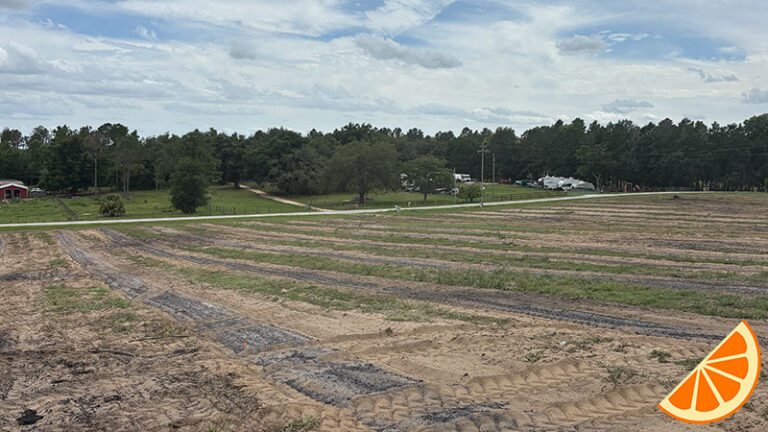
Look at that soil.
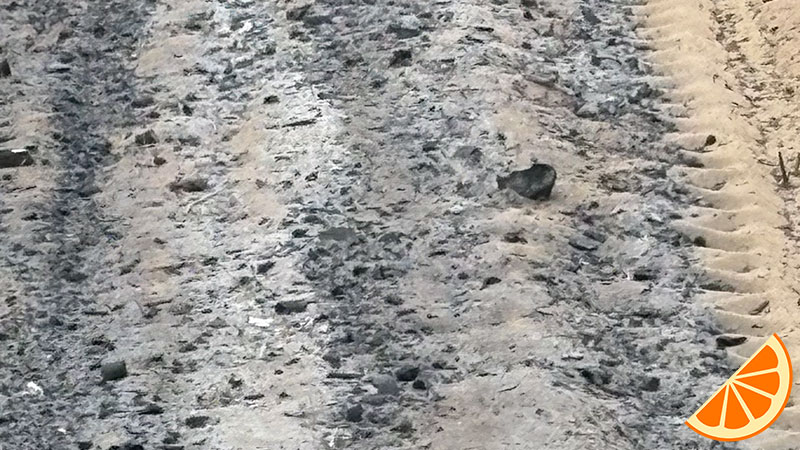
If you’ve never seen biochar tilled into Florida sand, the photos from this week’s grove work will stop you cold. The contrast is dramatic — deep, dark, almost black carbon worked into rows of pale Lake County sandy loam, stretching across a field that two months ago held dying citrus trees. It doesn’t look like soil prep. It looks like something being reborn.
That’s exactly what’s happening.
After we pushed the old trees, piled the debris, and burned what the HLB disease left behind, the work moved to the next phase: leveling the rows, incorporating the resulting biochar into the planting strips, and laying down the foundation for a grove that is going to be healthier than anything we’ve planted here before.
This is what that process looks like — and why the science behind it matters.
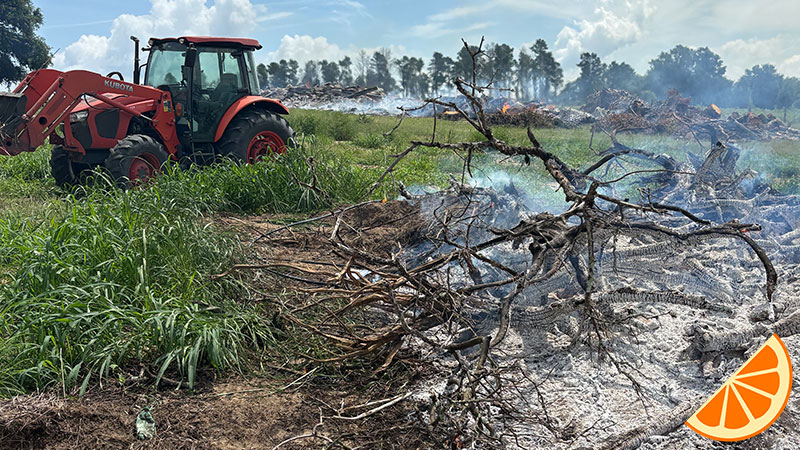
“The trees that died are now giving something back. That’s the thing about organic farming — nothing is ever really wasted.”
What Biochar Actually Is — and Why It’s Different From Ash
Most people think of fire as destruction. Agronomists think of it as transformation.
When organic material — wood, roots, bark — burns slowly and incompletely, without full oxygen, it doesn’t fully combust into ash. Instead, it produces biochar: a porous, carbon-rich material with a structure that looks, under a microscope, like a honeycomb. Millions of tiny chambers, each one a potential habitat for soil microbes, a reservoir for water, a binding site for nutrients.
Complete combustion produces ash — mineral-rich, alkaline, immediately plant-available. Partially combusted material produces biochar — structurally complex, slow-release, and persistent in soil for hundreds to thousands of years.
When you burn piles of citrus trees in a Florida grove, you get both. The gray-white ash returns minerals immediately. The dark black biochar chunks — the ones you’re seeing in our soil photos — are something else entirely. They’re a long-term infrastructure investment in the ground itself.
What Biochar Does for Florida Citrus Soil
Florida’s sandy soils are both a blessing and a challenge. They drain beautifully — citrus roots hate waterlogging — but they also drain the things roots need: water, nutrients, microbial life. Organic matter that would cling to clay soils washes through Florida sand in a season.
Biochar changes that equation in genuinely remarkable ways.
What Biochar Does | Why It Matters for Organic Citrus
- Holds water in the root zone: Sandy Florida soil typically drains water and nutrients within hours of rain. Biochar’s porous structure acts as a sponge, slowing that drainage and keeping moisture available to roots during dry spells — critical for young trees establishing in their first summer.
- Increases cation exchange capacity (CEC): CEC is the soil’s ability to hold positively charged nutrients — calcium, magnesium, potassium — and release them slowly to roots. Florida sandy soils have naturally low CEC. Biochar dramatically increases it, meaning organic fertilizers you apply stay in the root zone longer instead of leaching away.
- Creates microbial habitat: Those microscopic chambers in biochar structure become housing for beneficial soil bacteria and fungi — including the mycorrhizal networks that citrus roots depend on. Biochar-amended soils consistently show higher microbial diversity and activity than non-amended soils.
- Sequesters carbon for centuries: Unlike compost, which breaks down within a few years, biochar is stable in soil for 500–1,000+ years. Each ton incorporated into this grove is carbon removed from the atmosphere and locked into the ground permanently. For a certified organic operation, that story matters.
- Raises pH naturally: Combined with the wood ash from the burn, biochar contributes to a gentle pH increase in our naturally acidic sandy soil — moving it toward the 6.0–7.0 sweet spot that citrus prefers, without synthetic lime applications.
- Reduces nutrient leaching: University of Florida research has shown that biochar application in citrus soils can reduce nitrogen and phosphorus leaching by 20–40%, meaning the organic inputs we add go further and stay where roots can find them.
Why This Grove’s Biochar Is Special
Commercially purchased biochar — increasingly available to organic farmers — typically runs $750–$1,000 per ton. It’s produced in purpose-built kilns from feedstocks like wood chips or agricultural waste.
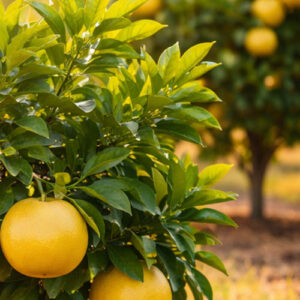
The biochar going into our grove this season came from our own trees. The same Ruby Red grapefruit trees that produced fruit on this land for years are now, through fire and incorporation, becoming part of the soil that will feed the next generation of trees. There is no more direct expression of regenerative farming than this.
We didn’t buy it. We made it — from what the disease left behind.
Leveling the Rows: Precision Prep for Fall Planting
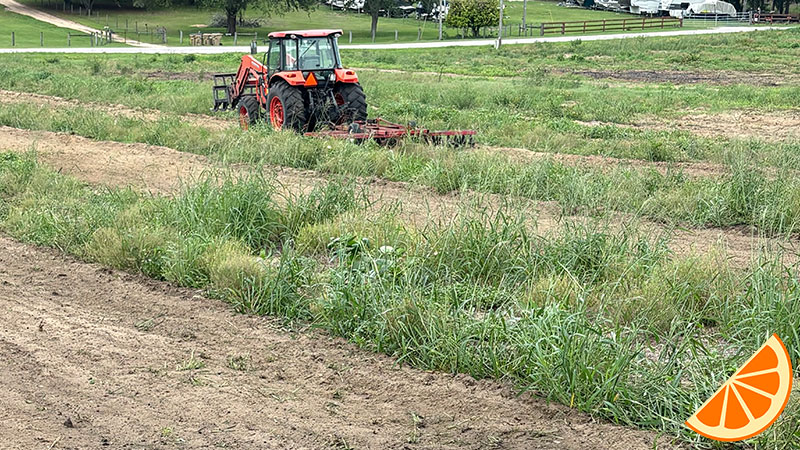
The biochar incorporation is only part of what you’re seeing in the field this week. The other half of the work is physical: leveling the rows that will receive the new trees.
When you clear a citrus grove — push the trees, pile the debris, burn the piles — the ground is left rough. Root crowns leave depressions. The tractor passes leave ruts. Ash and burned material are uneven across the surface. Before a new tree goes in the ground, all of that has to be smoothed out, the rows have to be mounded correctly for drainage, and the soil profile has to be consistent from one end of the row to the other.
This is the kind of work that doesn’t look dramatic from a distance — but every pass of the tractor is a decision. Where the row sits, how high it’s mounded, how it drains — these are the decisions that determine how the new trees’ roots will establish over the next three years.
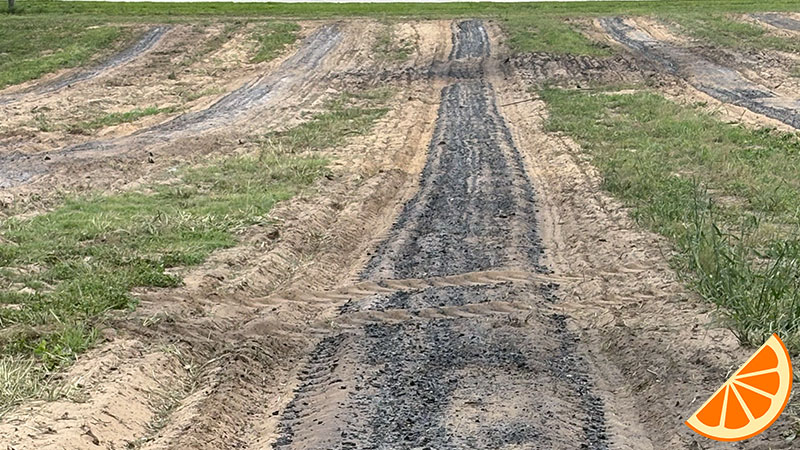
The rows you’re seeing in these photos are being prepared at the spacing our FDACS Division of Plant Industry consultants recommended — designed for the current HLB environment, for mechanized care, and for the long-term canopy structure of a producing organic grove. This isn’t how we planted twenty years ago. It’s how we plant now, with everything we’ve learned.
“You can see across the whole field now. First time in years. It’s wide open and waiting — and that’s the most hopeful thing I’ve looked at in a long time.”
What Happens Next: Fall Planting
The fall planting window is closing. Once the cover crop establishes across the prepared ground and the biochar has had time to begin binding into the soil matrix, the new trees go in. Certified organic Ruby Red grapefruit — every one of them. Same variety, new generation, in ground that has never been better prepared.
Here’s the timeline for what comes between now and the first fruit:
The Road from Prepared Ground to First Harvest
- Now → Fall: Cover crop establishes, biochar binds into soil, rows settle and finalize
- Fall 2026: New certified organic Ruby Red trees go in the ground
- Year 1: Root establishment, canopy training, first pruning — no fruit yet
- Year 2: Canopy develops, tree identity forms — subscribers receive growth updates and photos
- Year 3–4: First blossoms. First fruit. The moment the whole thing has been building toward
- Year 5+: Full production — a tree you can know for the rest of your life
Subscribers who adopt a tree this fall are adopting it from the very beginning. There will be no other Year 1 for this block.
Why This Matters Beyond the Grove
Biochar application in agricultural soils is one of the most promising tools in regenerative farming — not because it’s new technology, but because it’s very old knowledge being rediscovered. Indigenous farmers in the Amazon used it to create the remarkable ‘terra preta’ soils that remain fertile centuries after their creation, discovered by archaeologists long before modern agricultural science understood why they worked.
For Florida citrus specifically — a crop fighting for its life against a disease that has no cure — soil health isn’t a secondary concern. Trees that grow in rich, microbiologically active, well-structured soil are more resilient. They express better natural defenses. They respond to organic inputs more efficiently. They produce fruit with more character.
The dark rows in these photos aren’t just a stage of grove prep. They’re the foundation of a grove that’s going to be different from anything on this land before — built from what was lost, informed by what was learned, and ready for trees that your family, and ours, might be talking about for generations.
“I’ve planted a lot of trees in this county. Never planted any of them into ground this good.”
– Greg Homan, Lake County, Florida. Citrus grower since 1974.