The Part of the Tree Nobody Talks About
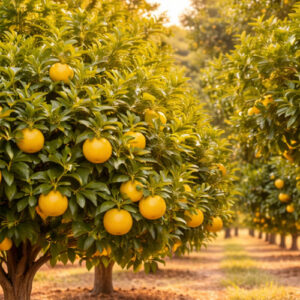
When your first box arrives from the grove, chances are you head straight for the fruit. The weight of a real Ruby Red grapefruit — grown organically in Florida soil, on a tree with your name on it — feels different from anything you’ve ever pulled off a grocery shelf.
But here’s something most people never think about: the leaves.
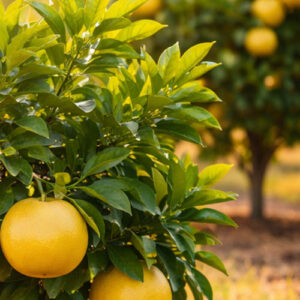
They’ve been there all along, soaking up the same Florida sun, breathing the same grove air, pulling from the same root system that grows your fruit. And for centuries, in kitchens and folk traditions across the Caribbean, Latin America, and Southeast Asia, grapefruit and citrus leaves have been quietly doing things that chefs and herbalists know about — but most home cooks have never discovered.
Until now.
“Your tree is more than the fruit at the end. It’s a living thing — and the leaves are part of that story.”
Why Organic Matters for the Leaves
This is the one part you can’t skip. Citrus groves that use conventional spray programs apply treatments directly to the foliage — the leaves absorb far more than the thick-skinned fruit does. When it comes to cooking with citrus leaves, organic certification isn’t a preference. It’s the baseline.
Because our grove is 100% USDA Certified Organic, the leaves that come off your tree are clean. No synthetic pesticides. No mystery residue. Just leaf.
That changes everything about what’s possible in your kitchen.
5 Ways to Use Grapefruit Leaves at Home
1. Grove-Smoked Chicken or Fish
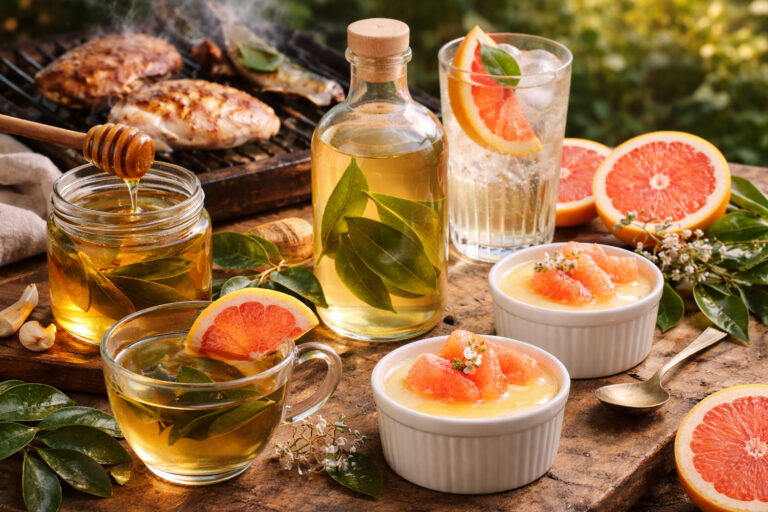
This is the most underrated use of any citrus leaf, and it works beautifully with grapefruit. Dry a handful of leaves completely — spread them on a baking sheet and let them air-dry for two or three days, or dry them in a low oven (200°F) for about an hour.
When you’re ready to grill, toss them directly onto hot coals or a gas grill’s smoke pouch. They release a clean, lightly citrus-floral smoke that lifts fish, chicken, and pork without overpowering them.
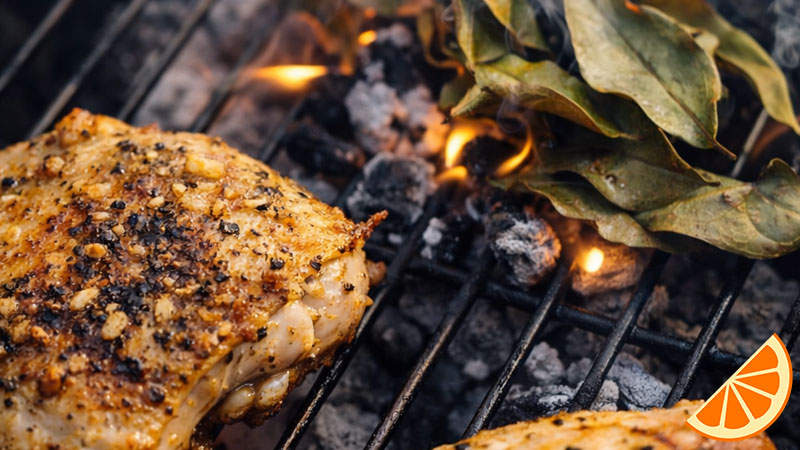
What you need:
- 6–8 dried organic grapefruit leaves
- Fish (snapper, mahi, salmon) or chicken thighs
- Salt, olive oil, garlic
How to do it:
- Pat protein dry, season simply with salt, olive oil, and garlic
- Get your grill hot — charcoal preferred but gas works
- Toss dried leaves directly on coals just before adding protein
- Grill over the smoke; leaves will smolder, not flare
- Rest meat 5 minutes before serving
The flavor is subtle — a whisper of citrus in the smoke. That’s the point.
2. Grapefruit Leaf Tea
Brewing the leaves makes a mild, slightly floral, gently bitter tea with a clean citrus aroma. In Caribbean and Latin American traditions, this tea is made to calm the nerves, settle the stomach, and ease the body toward sleep. Whether you’re after the folklore or just a quiet evening drink, it works.
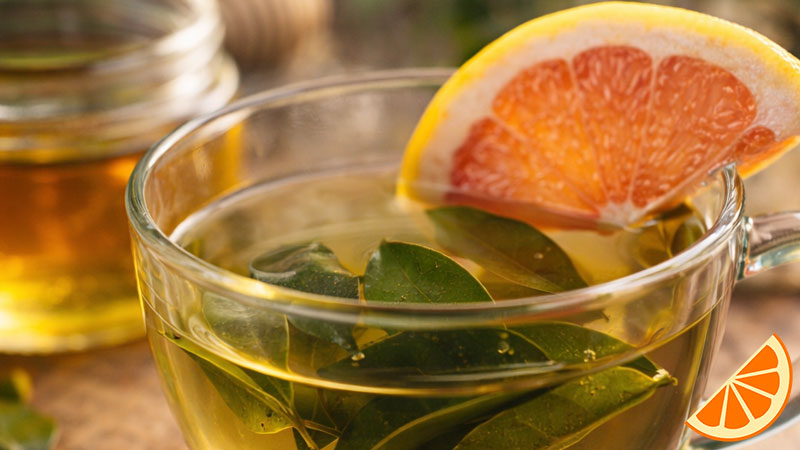
Simple Grapefruit Leaf Tea:
- 4–6 fresh organic grapefruit leaves, torn
- 2 cups boiling water
- Honey to taste (grove honey if you have it — see product below)
How To Do It:
- Steep leaves in boiling water for 5–7 minutes
- Strain, sweeten with honey if desired
- Add a slice of fresh grapefruit for presentation
Best served in the evening. Pairs well with the realization that you own an actual tree in Florida.
3. Grapefruit Leaf Infused Honey
This one becomes a pantry staple once you make it once. The leaves infuse into warm honey and disappear — what you’re left with is a gently citrus-floral honey that changes everything it touches: yogurt, cheese boards, cocktails, biscuits, salad dressings.
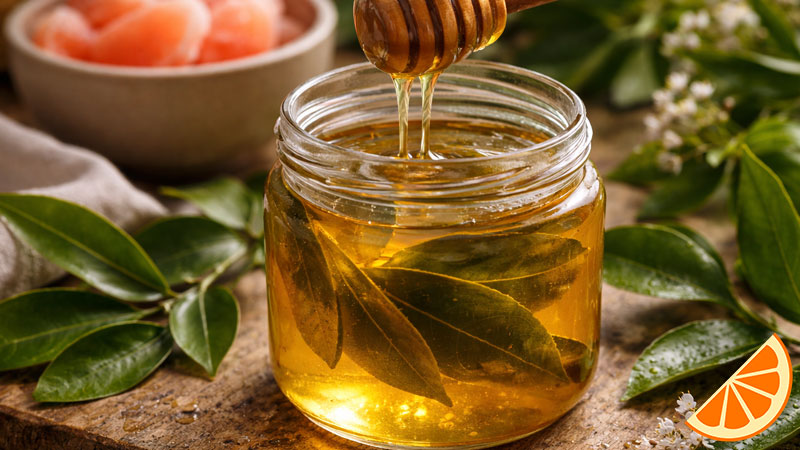
Grove-Infused Honey:
- 1 cup raw honey
- 8–10 fresh grapefruit leaves, lightly bruised
How To Do It:
- Warm honey gently in a small saucepan over LOW heat — do not boil
- Add bruised leaves; stir once
- Keep on the lowest heat for 20 minutes, stirring occasionally
- Remove from heat; steep another 30 minutes as it cools
- Strain leaves, pour into a clean jar
- Stores at room temperature up to 3 months
Drizzle over fresh grapefruit segments, aged cheddar, or a bowl of overnight oats. You made this from your tree.
4. Grapefruit Leaf Panna Cotta
Citrus leaves infused into cream is a technique borrowed from pastry chefs who know that the most interesting flavors often live just below the surface of things. Grapefruit leaves turn a simple panna cotta into something that tastes like a grove at dusk — floral, clean, barely sweet.
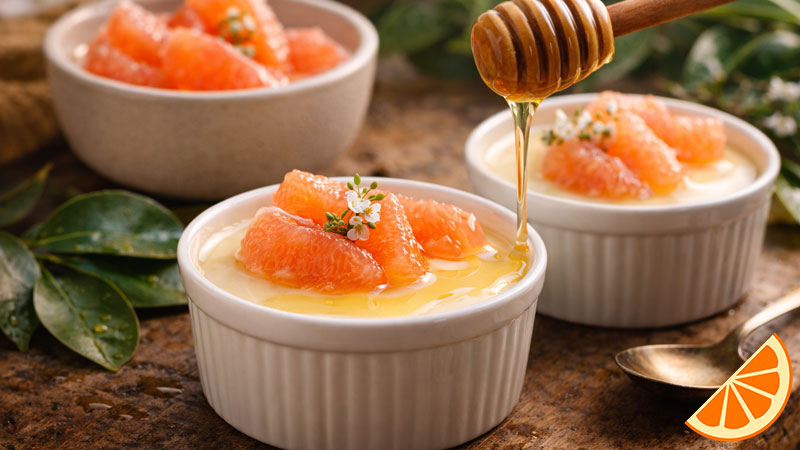
Grapefruit Leaf Panna Cotta (serves 4):
- 2 cups heavy cream
- 6 fresh organic grapefruit leaves
- 3 tablespoons honey
- 2 teaspoons unflavored gelatin
- 2 tablespoons cold water
- Pinch of salt
How To Do It:
- Bloom gelatin in cold water for 5 minutes
- Warm cream with leaves and honey over medium-low heat until steaming — do not boil
- Remove leaves; whisk in bloomed gelatin until dissolved
- Pour into ramekins; refrigerate 4+ hours
- Serve with fresh grapefruit segments or grove-infused honey
Elegant enough for dinner parties. Simple enough for a Tuesday. Made entirely from your tree.
5. Citrus Leaf Cocktail Syrup
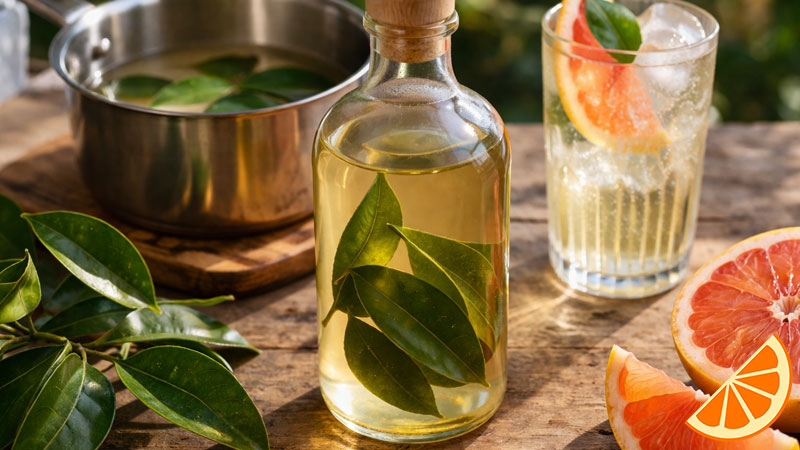
Bartenders have been quietly using citrus leaves in syrups for years. Grapefruit leaf simple syrup brings a sophisticated, aromatic quality to cocktails (and mocktails) that grapefruit juice alone can’t deliver — more green and floral, less sharp.
Grapefruit Leaf Simple Syrup:
- 1 cup water
- 1 cup white sugar (or raw cane sugar for a slightly amber version)
- 8 fresh grapefruit leaves
How To do It:
- Combine water and sugar in a saucepan; heat until dissolved
- Add leaves; reduce heat and steep 15 minutes
- Cool completely; strain; store in the fridge up to 2 weeks
Use it in:
- A grapefruit leaf gin spritz
- Sparkling water with a slice of fruit
- Lemonade — add a splash for a grove-flavored upgrade
- A citrus mule (sub for ginger syrup)
A Note from the Grove
The leaves we’re talking about are not an afterthought. They’re part of the same living system that grows the fruit you already adopted. Every Ruby Red grapefruit your tree produces pulls from roots, trunk, branches, and leaves. When you use those leaves in your kitchen, you’re experiencing the whole tree, not just the harvest.
That’s what adopting a tree is really about. Not just a box of fruit. A connection to a living thing, in real soil, in a real place — Lake County, Florida — where your family’s name is on an actual tree.
The leaves make that connection taste like something.
Farmers don’t grow fruit. They grow trees. The fruit is just what the tree gives you when it’s ready.
— Greg Homan, Lake County, Florida. Citrus grower since 1974.